The K-Beauty Mindset.
And What It Means for Your Next Property Decision.
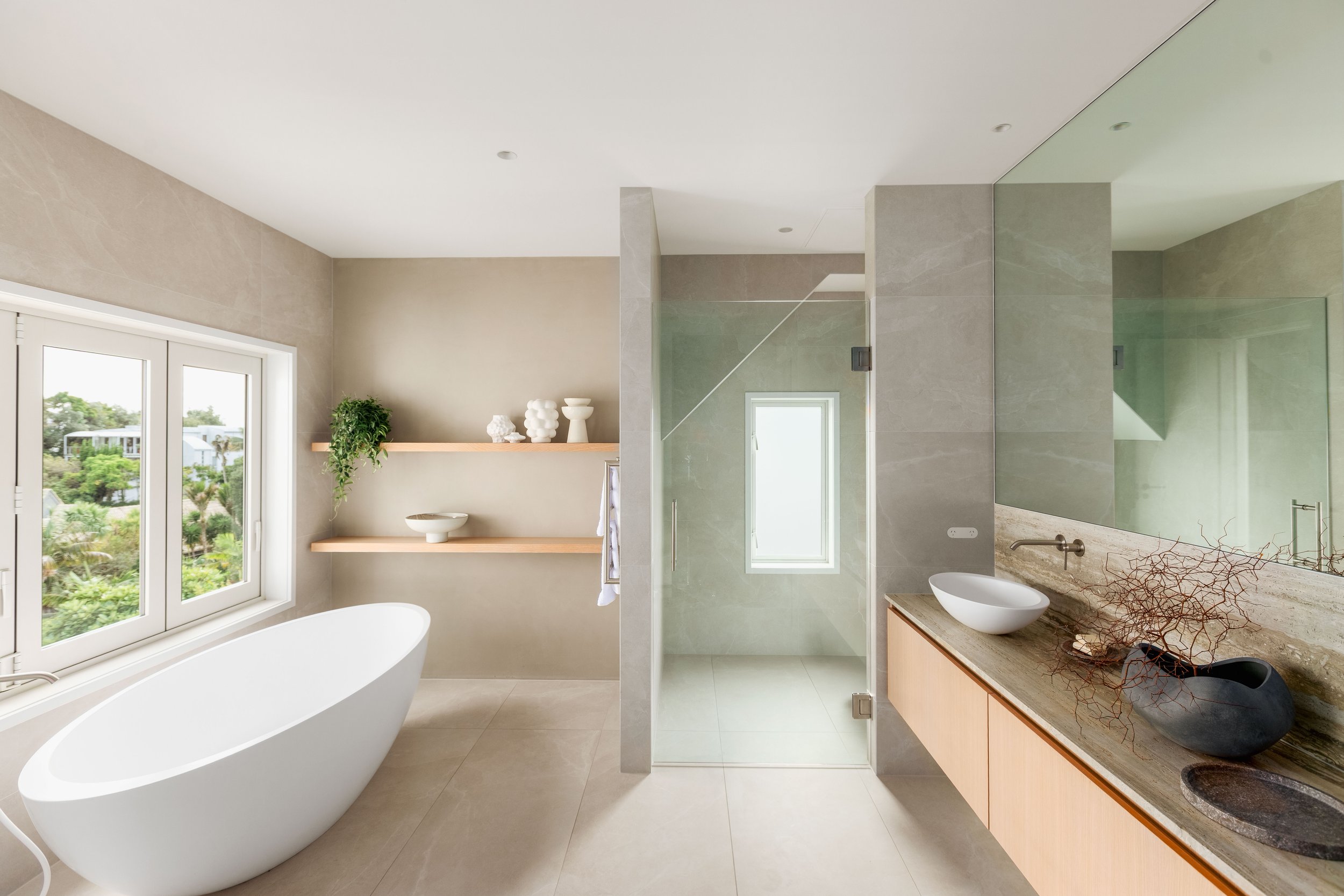
K-Beauty brings nature into your routine. Great architecture brings nature into your home.
20 Springcombe Road I St. Heliers, Auckland I New Zealand
Two wildly different industries. One surprisingly similar mindset.
At first glance, Korean beauty and premium property appear to have nothing in common. One sells serums. The other sells significance. One fits in your bathroom cabinet. The other represents the most consequential financial decision most people will ever make.
Look closer and the parallels are not just interesting. They are instructive — for anyone buying or selling property at any price point.
First, take the numbers seriously
Korean beauty reached USD 15 billion in global online market size in 2025, up from USD 12.5 billion just a year earlier. The US now accounts for 54 percent of K-beauty's overseas online sales. Broader estimates place the total market at over USD 110 billion, projected to reach USD 275.6 billion by 2035.
These are not niche numbers. This is one of the fastest growing consumer industries on the planet, built on a philosophy so coherent and so compelling that it has crossed every cultural and geographic border it has encountered.
That philosophy is worth understanding. Because it mirrors, almost precisely, how the best property decisions are made.
What K-Beauty actually teaches
K-Beauty does not win on products. It wins on thinking.
Korean dermatology culture treats skin as a long-term investment. The average Korean consumer begins developing a skincare routine in their early teens, not to fix problems, but to prevent them from appearing at all. Prevention is not optional. It is foundational. The multi-step routine is not complexity for its own sake. It is a sequence of deliberate, layered investments, each one building on the last, compounding quietly over months and years until the results become undeniable.
The K-Beauty consumer is not buying a serum. They are buying into a practice. A sustained commitment. A daily act of choosing the long-term over the immediate.
There is something else worth noting. The K-Beauty routine is deeply private. It happens behind closed doors, away from public view. The results speak, but the process does not announce itself. That quiet confidence, that willingness to invest without seeking validation, is a quality that defines the most considered property decisions too.
The discipline is the strategy. And in both worlds, the strategy works.
A word on the New Zealand market
Like K-Beauty, the most effective property campaigns strike a balance between two things that might appear to be in tension. Broad visibility that creates genuine market awareness and competition. And granular, individual attention that protects the interests, privacy, and relationships of the people involved.
K-Beauty built a USD 110 billion global industry on exactly that balance, bold enough to reach millions, personalised enough to feel like it was made for one person. The best property campaigns work the same way. Wide enough to find the right buyer. Precise enough to handle what follows with complete discretion.
New Zealand's wealth is not loud. It does not need to be. That quiet depth, combined with an increasingly active international buyer market, means the right buyer for a significant property is rarely as far away as it might appear. Finding them requires reach, relationships, and the judgment to know when to be visible and when to be discreet.
Five parallels worth taking seriously
1. Ritual over impulse
K-Beauty's growth was not built on impulse purchases. It was built on routines. Consistent, daily commitments that compound invisibly until the results become impossible to ignore.
The best property outcomes follow exactly the same logic. Preparation before listing. Strategic positioning. Patient execution. The discipline is the strategy, and the results compound in ways that a rushed or reactive approach never can.
2. Prevention over correction
K-Beauty's most enduring insight is that preventing damage costs far less than correcting it later. Korean skincare starts early, stays consistent, and rarely needs dramatic intervention because the groundwork was laid long before any problem had a chance to take hold.
A vendor who surfaces issues before going to market, resolves what can be resolved, and discloses what cannot, removes the discount events that negotiate against them at the worst possible moment. Problems discovered during due diligence do not disappear. They become leverage. Prevention is a sales strategy. Correction after the fact always costs more than it needed to.
3. Evidence over assertion
K-Beauty built its global following on ingredient transparency and clinical rigour. Consumers arrive informed, ask precise questions, and remain sceptical of claims without evidence. Skincare products led the K-beauty market with a 56.78 percent revenue share in 2025, driven by a culture that rewards brands willing to show their workings.
Premium property buyers operate identically. In 2025, high-net-worth individuals shifted decisively away from treating property as a default safe haven, seeking instead strategic criteria: long-term return, liquidity, and documented value. A vendor who can demonstrate the basis for their asking position is speaking the language of a buyer who has done their research. Evidence builds confidence. Confidence accelerates decisions.
4. Wellness as the organising principle
K-Beauty's most lasting contribution to global consumer culture is the reframing of beauty as health. Not appearance. Health. The daily routine is preventive medicine, a deliberate, compounding investment in long-term physical wellbeing that pays dividends over a lifetime.
The premium home in 2026 is making exactly the same shift. Wellness mentions in property listings are up 33 percent year over year. Spa-inspired bathrooms have climbed 22 percent. Buyers want private gyms, meditation rooms, biophilic design, natural light, and spaces that actively support health rather than simply providing shelter.
This is not a trend. It is a structural shift in how buyers define value. A coastal home in New Zealand that delivers natural light, indoor-outdoor connection, proximity to water, and native landscape is not just beautiful. It is a wellness asset, and understanding it as such changes how it should be positioned, marketed, and priced.
5. The right guidance, engaged early
The most sophisticated K-Beauty consumers do not navigate complex multi-step routines alone. They work with skincare specialists who understand their skin, its history, its needs, and the sequence of care most likely to produce lasting results. The specialist is not a luxury. They are the variable that determines whether the investment pays off.
The same is true in property. The agent you choose, and when you choose them, is a consequential variable in your outcome. Not the market. Not the timing. Not the listing platform. An agent engaged early, before a property goes to market, shapes the strategy, the preparation, the pricing rationale, and the buyer approach that determines what your property achieves. Engaged late, even the best agent is working against time.
Working collaboratively across both sides of a transaction, representing vendors who want considered, discreet representation, and working with buyers searching for something specific, often before it ever becomes publicly available, produces outcomes that a purely transactional approach rarely reaches.
What this means if you are selling
The K-Beauty parallel for vendors is direct. Preparation is not a cost. It is a strategy.
Every step taken before a property goes to market compounds in the same way a skincare routine does, deliberately, consistently, and with results that are visible to the right buyer at exactly the right moment. The vendors who achieve exceptional outcomes are not those who listed fastest or priced most aggressively. They are those who understood their property's story, built the evidence to support its value, and engaged the right representation early, with the confidence that comes from genuine readiness.
This applies at every price point. Whether you are selling a much-loved family home, a coastal retreat, or a landmark estate, the principles are the same. The discipline is the strategy. And the strategy works.
The closing thought
K-Beauty built an industry worth over USD 110 billion not by selling products but by changing how people think, about prevention, consistency, and the compounding value of deliberate choices made over time.
The best property decisions are made the same way. With preparation, with evidence, with the right people alongside you, and with enough patience to let the process work.
Quietly. Confidently. And with results that speak for themselves.
Your skin is a long-term investment. So is your home. Treat both accordingly.
I work with vendors and buyers across Auckland and New Zealand, on market and off it. If you are considering selling, or searching for something that may not yet be visible, I welcome a confidential conversation.
Kelly Brown | New Zealand Sotheby's International Realty
kelly.brown@nzsir.com | +64 21 471 661
NZSIR North Limited | Licensed under the REAA 2008 | MREINZ
Sources
K-Beauty market data
Euromonitor International — K-Beauty Global Market Report 2025
Grand View Research — K-Beauty Products Market Analysis 2025-2033
Market.us — K-Beauty Products Market Size and Forecast 2025-2035
IMARC Group — Global K-Beauty Products Market Report 2025
FABRX Studio — K-Beauty and Korean Skincare Revolution 2025
Influenconnect — The Blurring of K-Beauty: Global Beauty Standards 2025
Pura Vida Med Spa — Korean Skin Care Philosophy 2026
SkinScore — K-Beauty Routine and Science 2026
Luxury property and wellness data
Ledwell Realty — 2026 Home Design Trends: What Buyers Are Responding To
Coldwell Banker Global Luxury — Trend Report 2025
Burgin Homebuilders — Top Luxury Home Trends 2026
Corcoran Property Advisors — Luxury Home Design Trends 2026